While Duke Energy reports record-breaking profits and prepares to announce massive executive paydays, they are simultaneously asking the North Carolina Utilities Commission (NCUC) to approve a significant increase in your monthly electric bill, by as much as 18% over the next two years.
If approved, these hikes will hit residential customers the hardest, adding roughly $23 to $30 more per month to the average bill. For the more than 300,000 North Carolinians already struggling to keep up with their bills, this could be a breaking point.
With the first public hearings starting on March 30, it’s time to look closely at what this 18% increase really funds—and who it leaves behind.
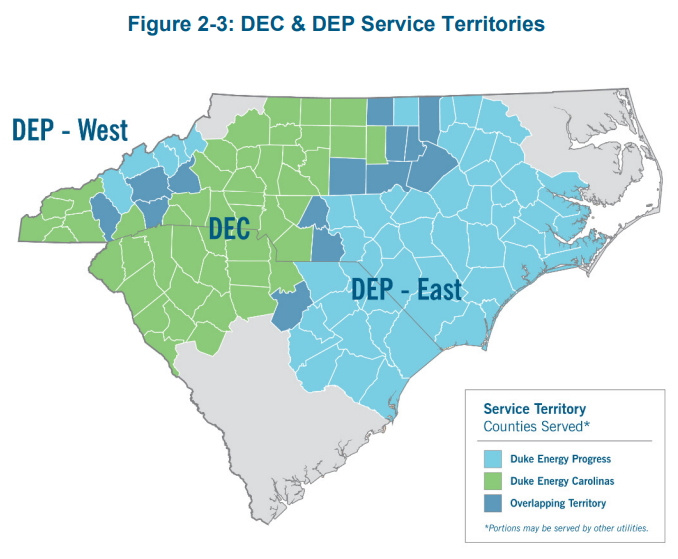
Duke Energy has filed two separate requests covering different regions of the state. These increases are proposed to roll out in two phases, starting January 1, 2027.
Here’s what that would look like for a typical household using 1,000 kilowatt-hours of electricity per month:
Duke Energy claims these hikes are necessary to maintain its financial position and meet future demand. However, a closer look reveals a different story:
Shareholders First: Duke is asking for a 10.95% guaranteed profit for its shareholders. The company touted $4.96 billion in shareholder profits in their most recent earnings report at the same time that they’re preparing to squeeze their customers for even more money.
Corporate Welfare: Much of the “new demand” Duke cites is coming from large, energy-hungry data centers powering AI—not everyday families. Yet it’s residents who are being asked to foot the bill: in contrast to the 18% rate hike on families and households, Duke wants to raise rates by just 12-14% for commercial customers and just 10-12% for industrial customers.
Fossil Fuel Expansion: Instead of pivoting to cheaper, local clean energy like solar and wind, Duke is doubling down on expensive new gas plants and extending the life of dirty coal plants.

Electricity is a basic necessity. When rates go up, families on fixed incomes, retirees, and low-income households are forced to make impossible choices. That $30 extra a month is money taken directly from groceries, life-saving medicine, or rent.
While Duke is ending vital programs like the Customer Assistance Program (CAP), they should be doing the opposite: expanding protections for vulnerable families and investing in affordable, clean energy that lowers costs for everyone long-term.
The NCUC is holding a series of public hearings across the state to hear directly from community members. You don’t need to be an expert to testify; your personal experience as a ratepayer is the most powerful evidence we have.
Find the hearing nearest you (or attend a virtual hearing) to tell the Commission how this rate hike would impact you, your family, and your community:
DEP customers wishing to testify must register by 5:00pm, March 25, 2026, through the NCUC’s website.
DEC customers wishing to testify must register by 5pm, March 31, 2026 through the NCUC’s website.
CleanAIRE NC has prepared Community Talking Points that can help inform your comments. But we encourage you to make your comments your own and share your personal story.
If you can’t attend a public hearing, you can still submit your thoughts directly to the NCUC in writing through their Comment Portal. Or you can mail your comments to the Utilities Commission at 4325 Mail Service Center, Raleigh, NC 27699-4300. If you need assistance with submitting comments please reach out at [email protected] and we would be happy to walk you through the process. Be sure to include the Docket number in your comments: E-2 Sub 1380 for Duke Energy Progress; and E-7, Sub 1329 for Duke Energy Carolinas.
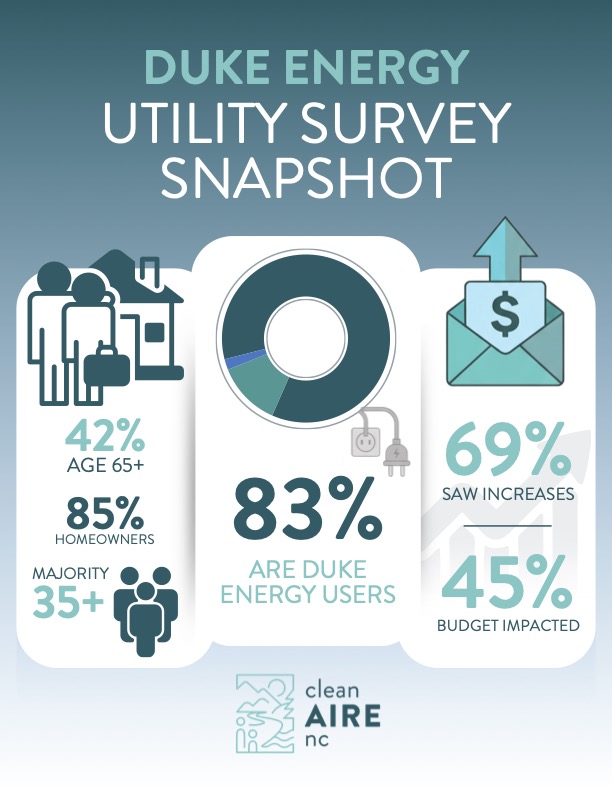
Utilities Survey Results: CleanAIRE NC recently conducted a survey asking North Carolina residents about their utility bills. Download our one-page summary to share how other North Carolinians are feeling about their rising energy burdens.
Rate Hike Webinar on March 25: Hosted by the North Carolina Conservation Network, Appalachian Voices, the North Carolina League of Conservation Voters, and Down Home North Carolina, this webinar will help community members prepare for the NCUC public hearings on rate hikes.
You shouldn’t have to choose between keeping the lights on and putting food on the table so that a monopoly can secure record profits. Let’s tell the NCUC that enough is enough.