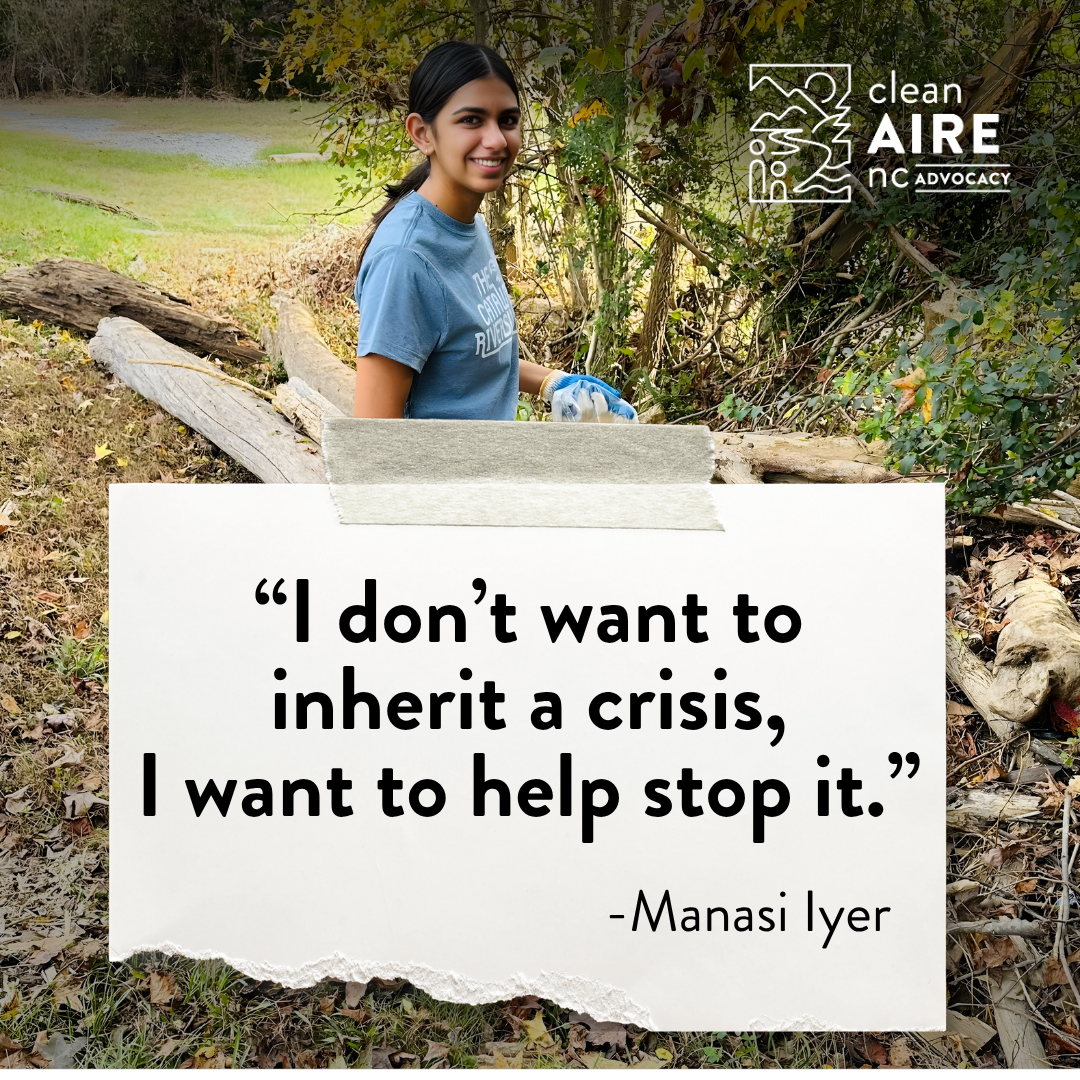
Standing at the edge of a once flowing river that now had a dock mounted up on a tree and stock piles of trash giving off a musty smell, volunteers such as myself struggled to pick up the pieces left behind by Hurricane Helene. Although a regular volunteer at the Catawba Riverkeeper, never had I experienced this level of destruction from climate change before.
Right there, I made a promise to myself. To help fix this. Not the storm, but our actions that lead to such disasters.
After learning about North Carolina’s Carbon Plan, I realized it was the perfect chance to do just that. A chance to stop climate change at its source. A chance for our state to become a leader in clean energy and inspire future generations of North Carolinians to follow in our footsteps.
North Carolina’s Carbon Plan and Integrated Resource Plan (CPIRP) process, commonly referred to as the Carbon Plan, was established through NC House Bill 951 in 2021. This bill requires Duke Energy, the largest energy holding company in North Carolina and one of the largest in the United States, to reduce its electricity generation-based carbon emissions 70% by 2030, and achieve net-zero carbon emissions by 2050. Every two years, the North Carolina Utilities Commission (NCUC) must review Duke energy’s new proposed plan for meeting these emission targets.
However, there is one issue. Due to North Carolina’s rapidly growing population and increase of data centers, Duke Energy anticipates much higher demands for energy in the near future. This has prompted them to push for more funding towards fossil fuel-based energy in their 2025 Carolinas Resource Plan, advocating for the very objectives that the Carbon Plan aims to restrict. Duke Energy’s plan poses two major concerns: the expansion of NC’s natural gas-based energy and the extension of the lifespan of NC’s coal plants.
Duke Energy plans to build five new combined-cycle gas plants, seven combustion turbines, and expand liquefied natural gas storage (Duke Energy 2025). That’s twelve new natural gas plants in North Carolina, the addition of which would release cancer-causing chemicals like benzene and formaldehyde into the air we breathe. These substances also cause asthma and lung problems, substantially worsening our overall air quality.
Duke Energy also plans to extend the usage of coal plants up to four more years beyond what was originally planned (Duke Energy 2025). Coal plants, however, are the largest emitters of mercury in the US, which causes developmental issues and cardiovascular diseases. Coal ash, which is the industrial byproduct of burning coal, also carries several carcinogenic metals such as arsenic and bromide. This means that each time it rains, runoff carries these pollutants into our water sources.
If the demand for energy is increasing, Duke Energy’s proposal for further reliance on fossil fuel-based energy will only exacerbate these negative effects. According to Adam Wagner, a reporter and editor for the NC Newsroom, Duke Energy’s proposal would see carbon dioxide emissions “peak around 60 million short tons of carbon dioxide” in 2036. This only slows down the process of achieving a 70% energy emission reduction by 2030 and net-zero emissions by 2050.
Neither myself nor my peers are intent on living in a society where air pollution and its associated respiratory problems are the standard. We don’t want worrying about toxic chemicals in our water every time we are thirsty to become a daily habit. We want a plan that prioritizes the health of its people and its environment: The Carbon Plan.
The Carbon Plan, meant to reduce electricity-based carbon emissions in NC, encourages the expansion of renewable energy that generates cost-efficient electricity while leaving behind zero waste. This means we get to breathe clean air, drink clean water, and are on the right track to reducing climate change. Let us keep this in mind while we consider North Carolina’s energy proposal and the future of its people.
Renewable energy lowers customer utility costs because it is now significantly cheaper than fossil fuel-based energy, especially in the long run. Jay Gulledge, a reporter from the University of Notre Dame and University of Tennessee, states that “the total global power generation from renewable sources saved $467 billion in avoided fuel costs in 2024 alone.” Additionally, Reuters news says that in 2024, “Solar photovoltaic (PV) was 41% cheaper on average than the lowest-cost fossil fuel alternatives, such as gas, while onshore wind projects were 53% cheaper.”
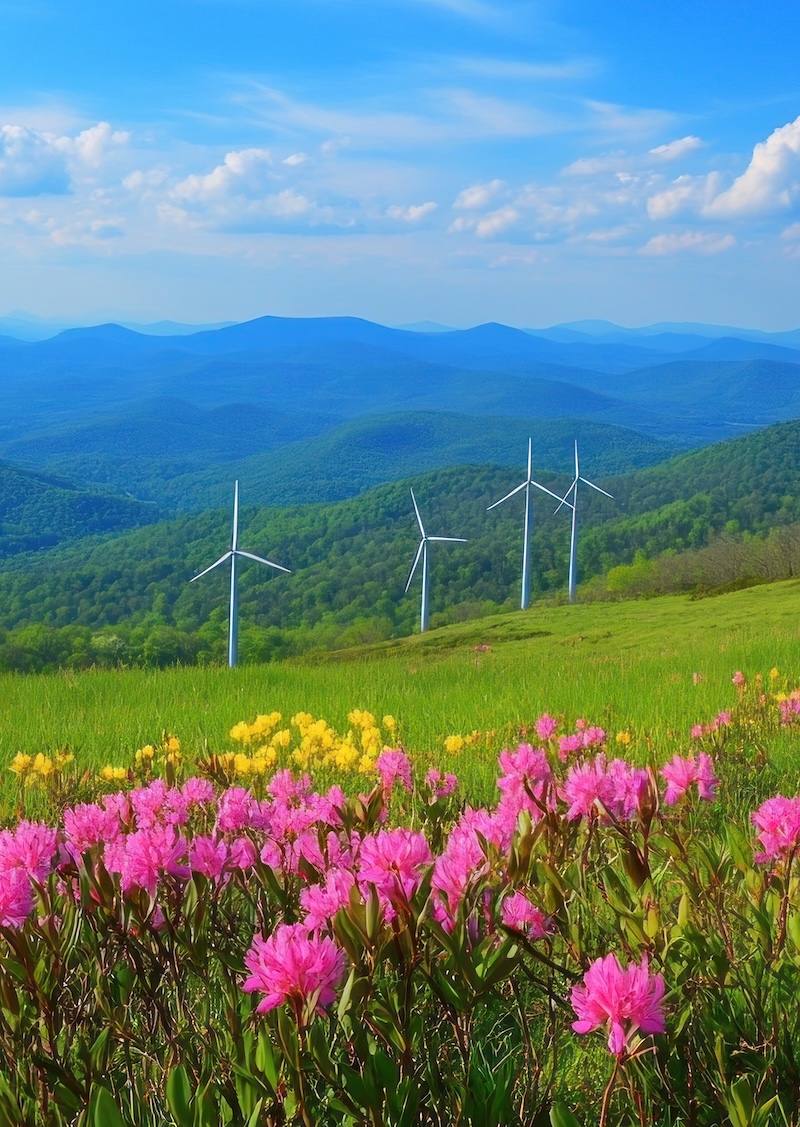
The reason for this cost difference is that renewable energy sources, such as the sun and wind, can be found anywhere and are free of charge, unlike fossil fuels, which require additional costs for mining or drilling. The primary reason that companies are hesitant to make the shift to renewable energy is because the transition period takes a few years to install these systems. However, making the change now ensures clean, low-cost energy for years to come, rather than installing additional fossil fuel plants. Especially with North Carolina’s “long coastline, steady ocean winds, and large areas of relatively shallow water,” our environment is highly favorable to wind-based energy.
According to Zach Meyers and Matt Adams of FOX59 News, 22% of my generation (Generation Z) is financially struggling due to high utility costs. Many individuals are taking extreme measures to conserve electricity, including taking cold showers and doing laundry in the bathtub. Some have even stopped spending money on necessities such as groceries and toilet paper, in order to afford their rising utility bills. As someone who will be an adult soon, I am deeply concerned for the future of my generation when it comes to Duke Energy’s Carolina Resource Plan. With it, utility costs only rise, worsening our generation’s financial crises. Conversely, the Carbon Plan’s expansion of renewable energy ensures energy is provided in the most cost-efficient way for North Carolinians.
Arguably the worst impact of burning fossil fuels for energy is the generation of carbon dioxide, trapping heat inside the earth’s atmosphere and causing climate change. This has already led to more frequent and intensified natural disasters around the world, such as floods, droughts, hurricanes, and wildfires.
Possibly having to live through this reality as young adults, my generation and those following us are afraid of what daily life will look like in the near future, having to live through a world of natural disasters, air pollution, and high utility costs. I do not believe it is fair to make future generations experience the impacts of those past.
2030 is just four years away, which means we must act fast to stay on track with our goal of achieving 70% energy emission reduction by then. It’s a question of pollution and climate change vs air quality and lower living costs. Without the Carbon Plan, ideas like mine stay small. But with it? I see a future where individuals like me are not just standing by the river, wondering; we’re making a change.