
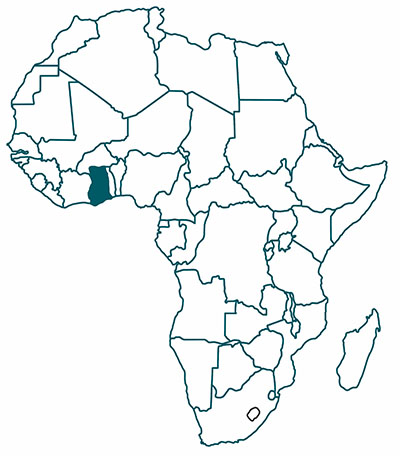
In September 2025, CleanAIRE NC staff members traveled to Ghana as part of the Mandela Washington Reciprocal Exchange Program, a U.S. Department of State and IREX initiative. In partnership with the Ghana Environmental Protection Agency (EPA) and local stakeholders, they led “CleanAIRE For All,” a project designed to build capacity and advance cross-continental collaboration on environmental health.





When I think back on our two weeks in Techiman, the first thing that comes to mind isn’t the heat, the travel, or the logistics. It’s the welcome. The open doors, open hands, and open conversations that shaped every step of this journey.
This trip began as a capacity-building project through the Mandela Washington Fellowship Reciprocal Exchange Program. But for me, it became something much more personal: a reminder of why CleanAIRE NC’s work matters, and how deeply our values translate across borders. And also a chance to travel to a country that is part of my ancestry, something I never imagined I would have the opportunity to do. Being in Ghana added a layer of meaning that I’m still unpacking, one that connected my professional purpose to a deeper sense of identity and belonging.
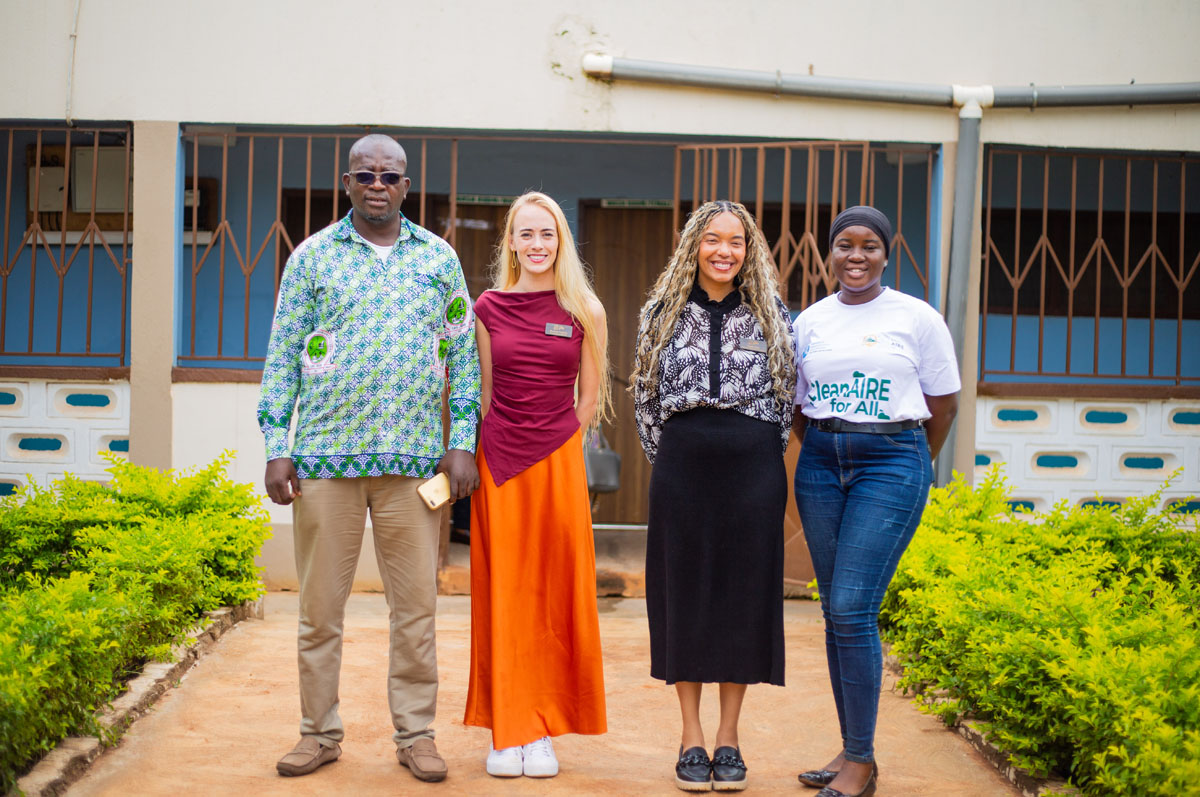
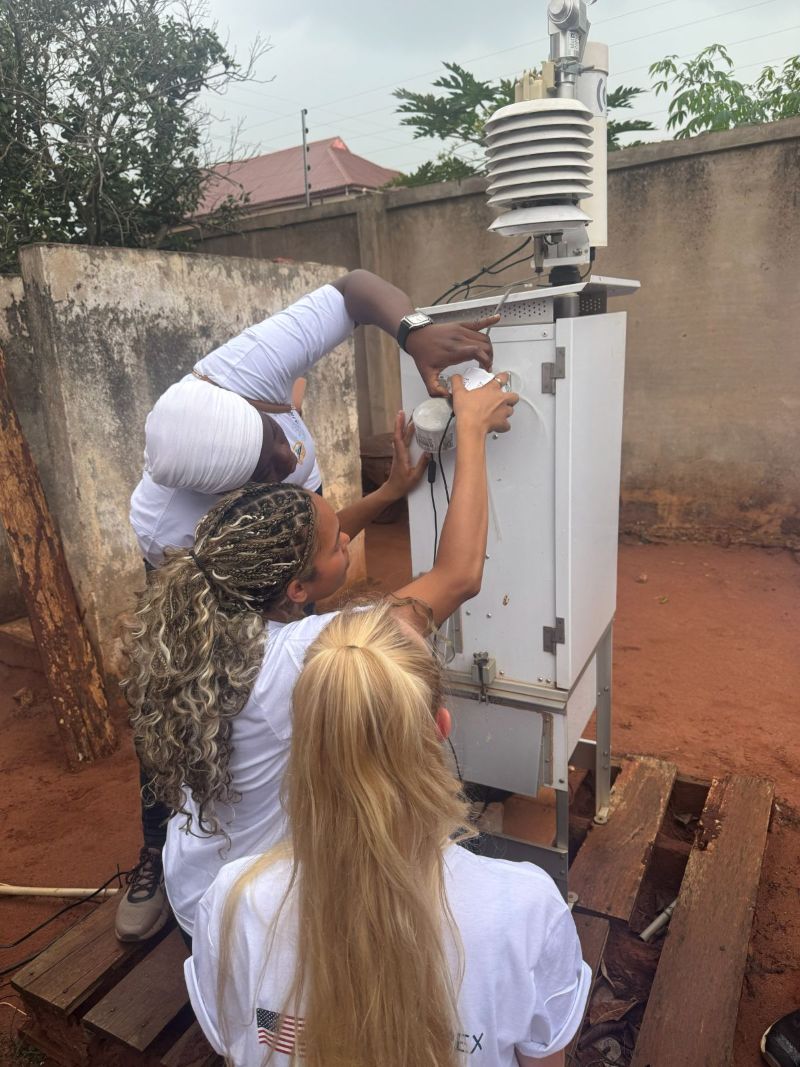
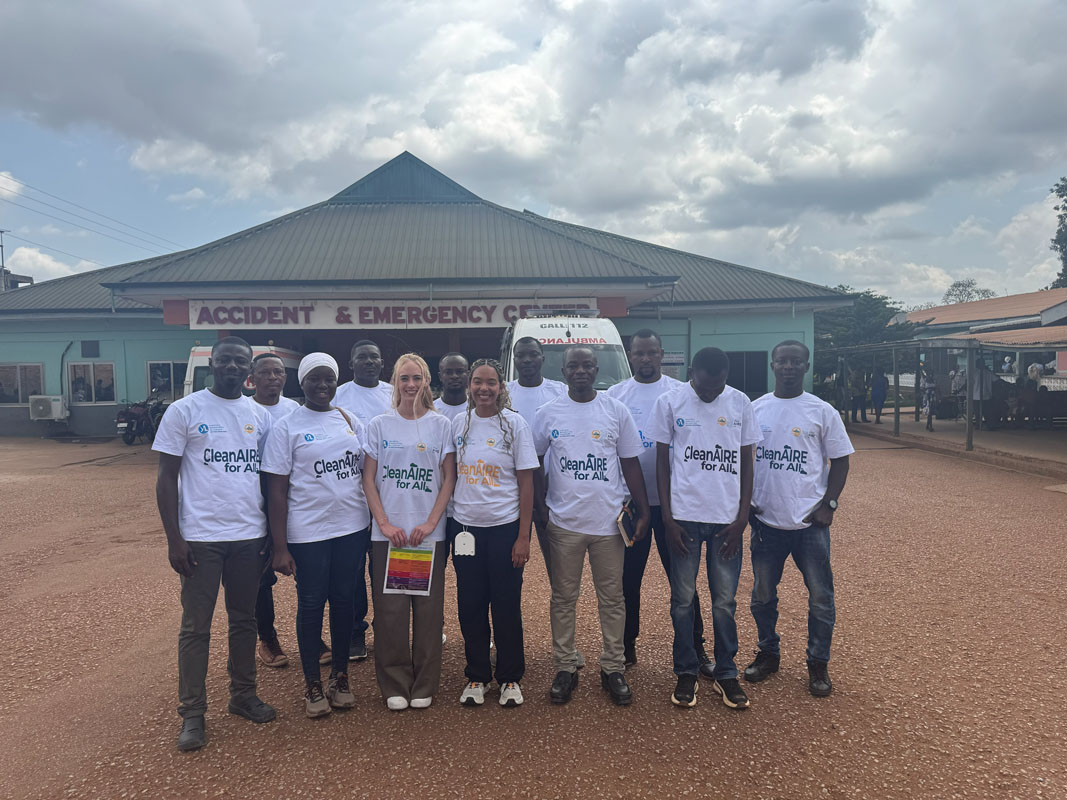
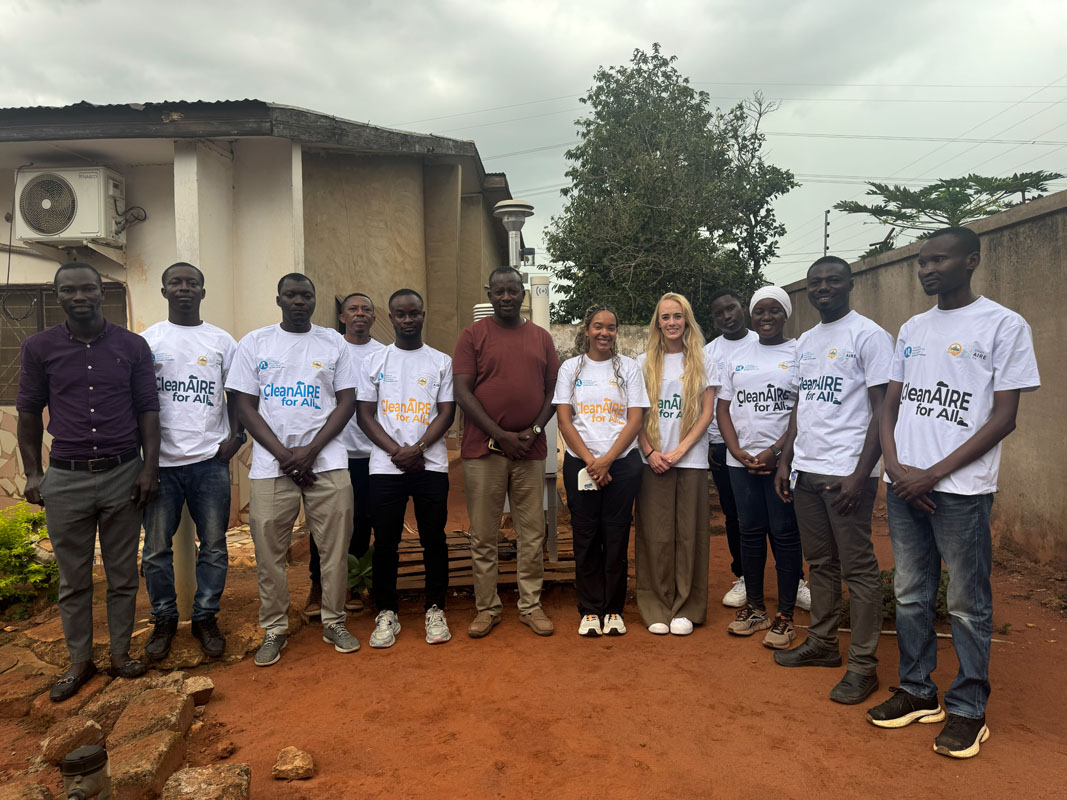
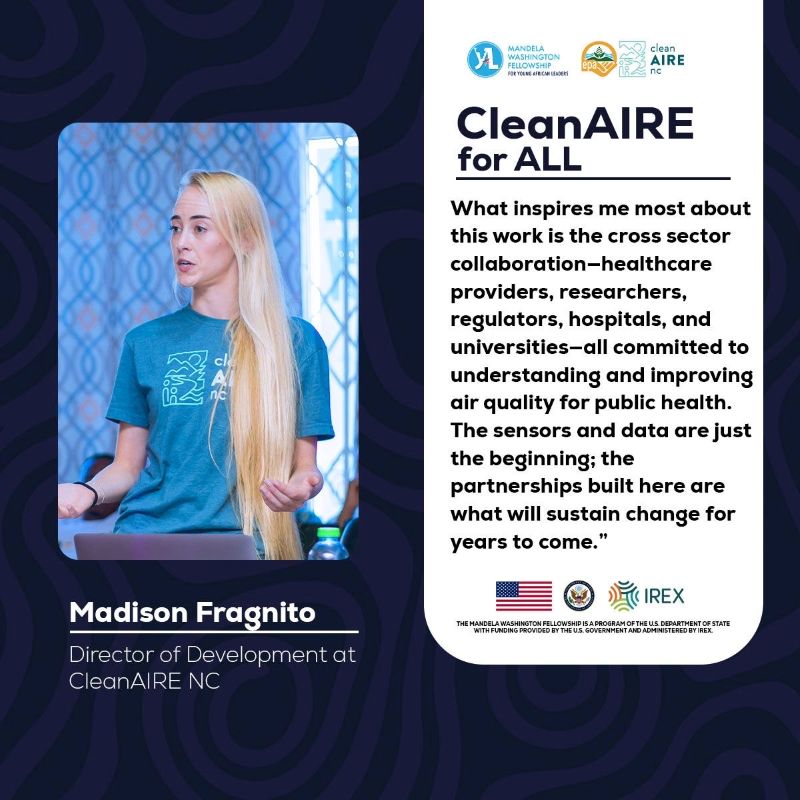
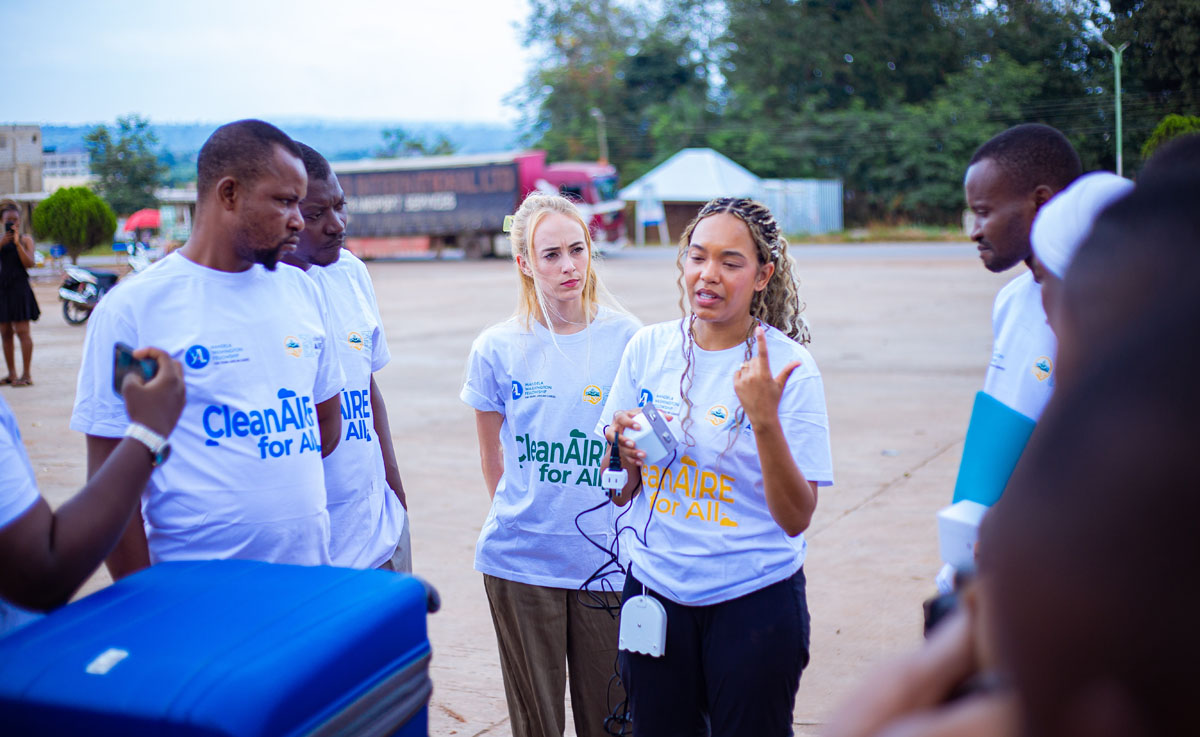
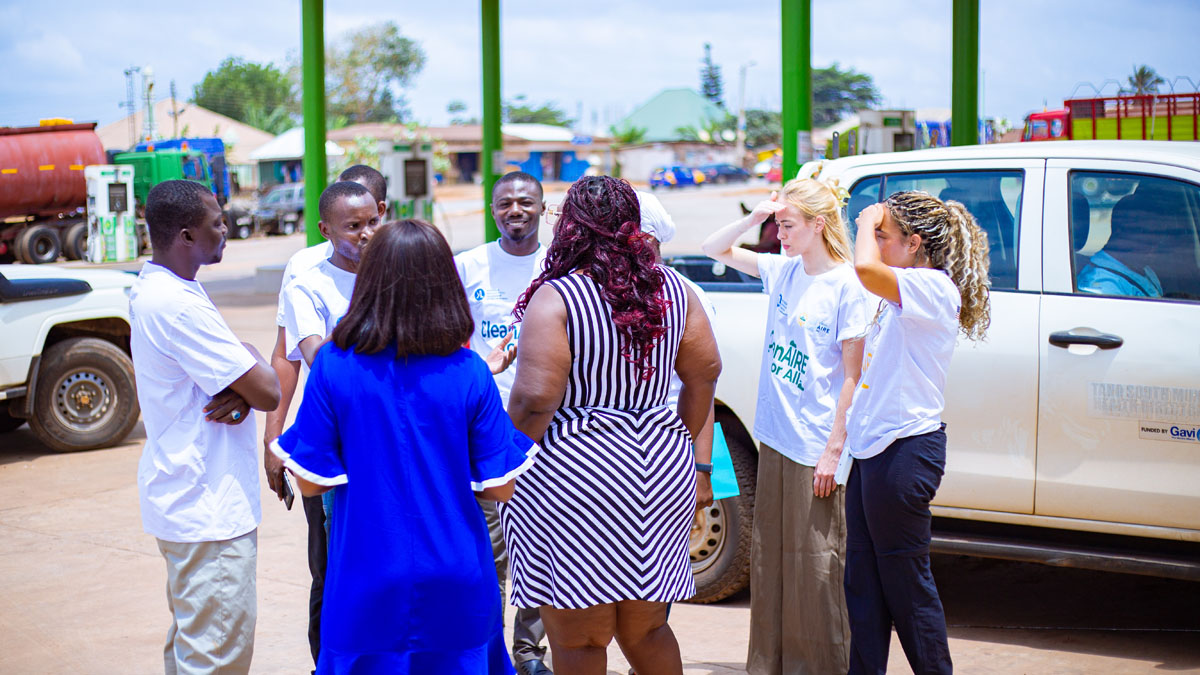
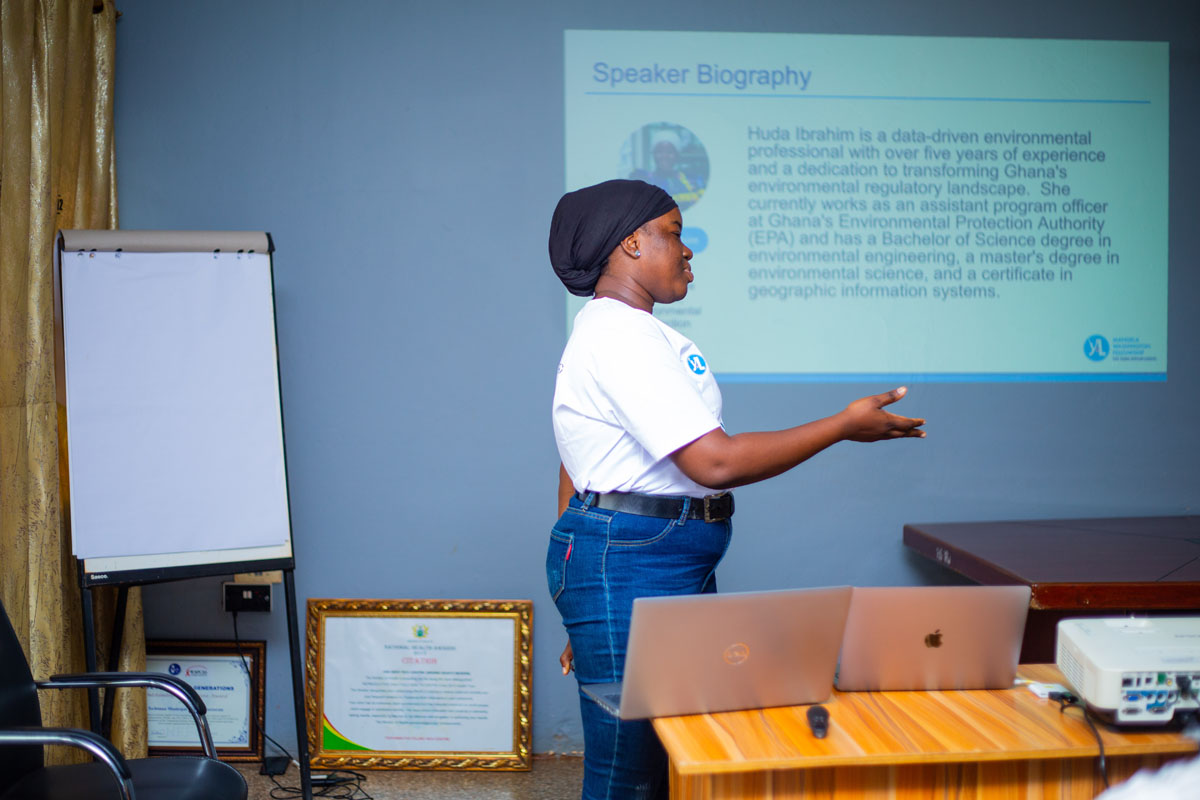
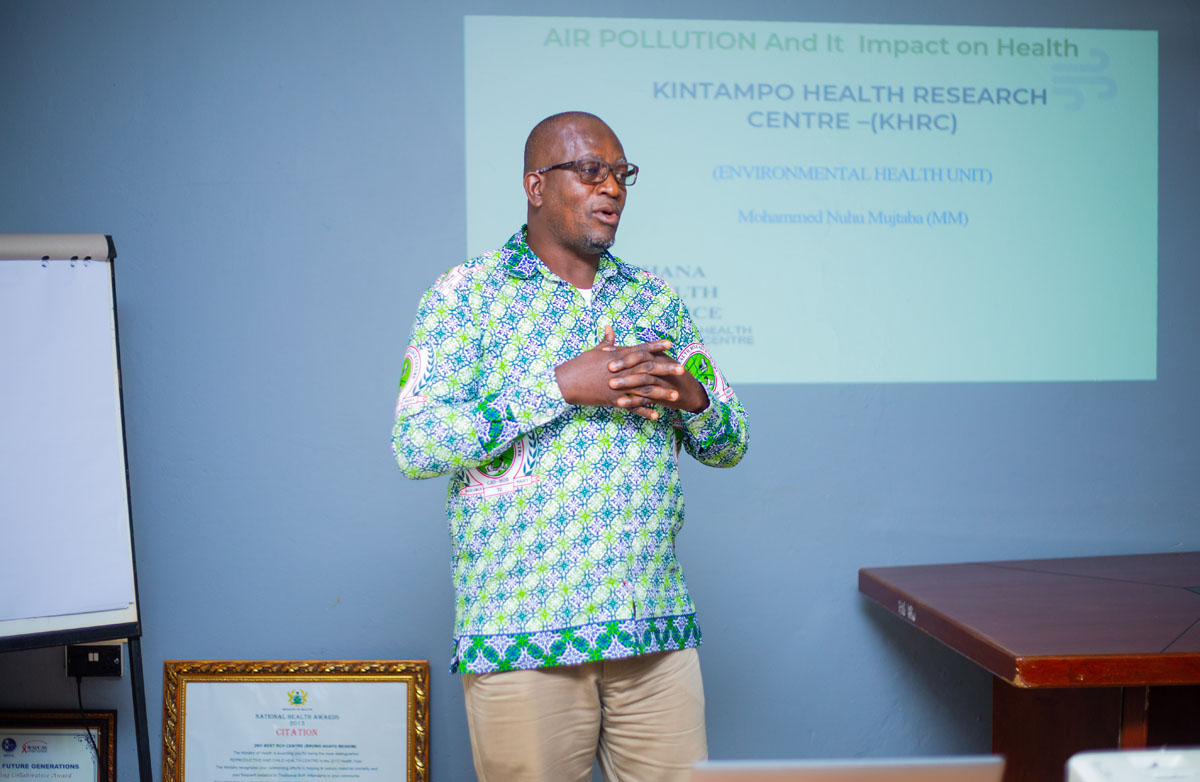
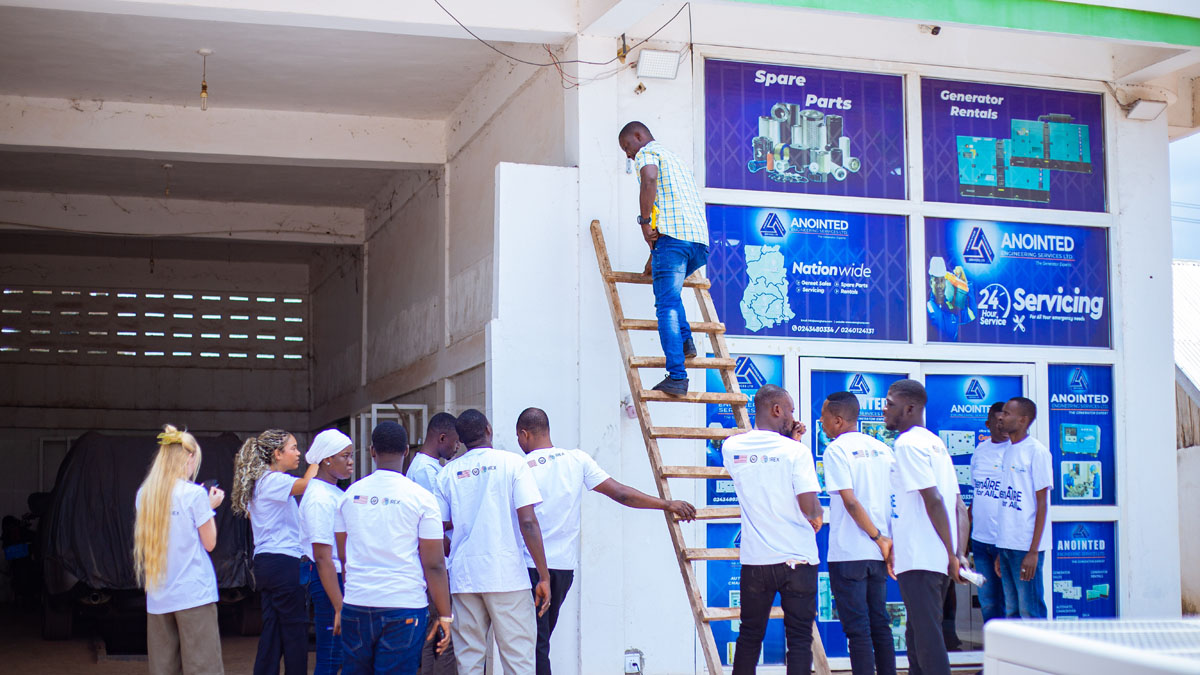
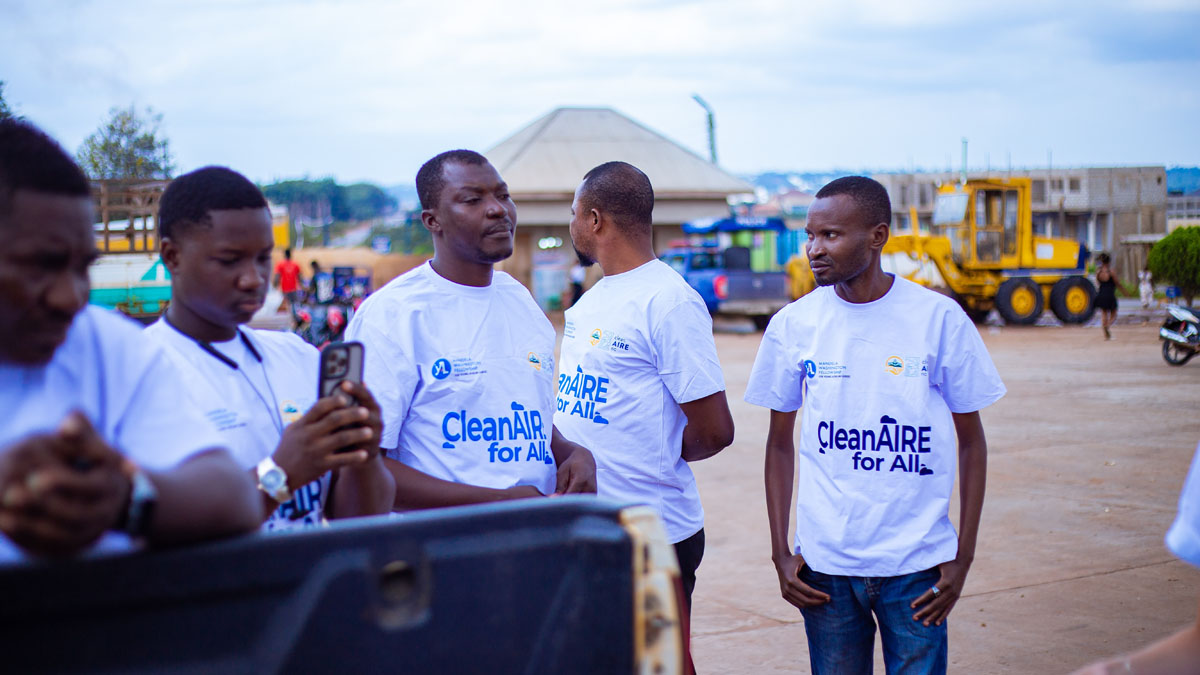
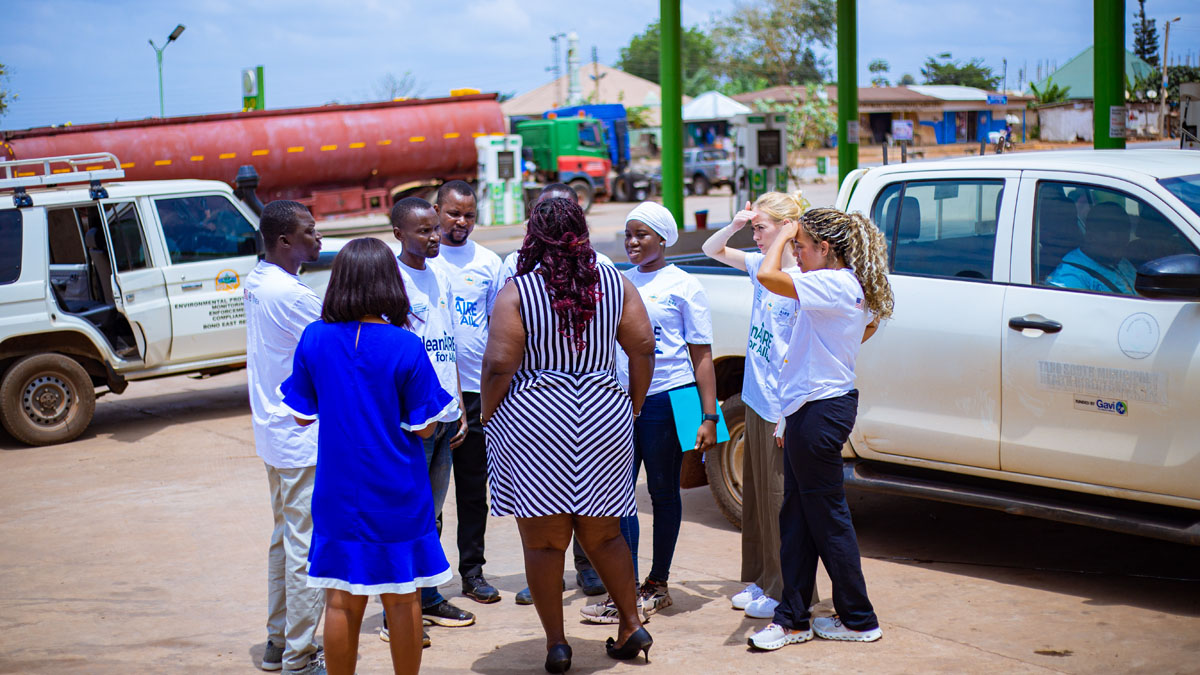
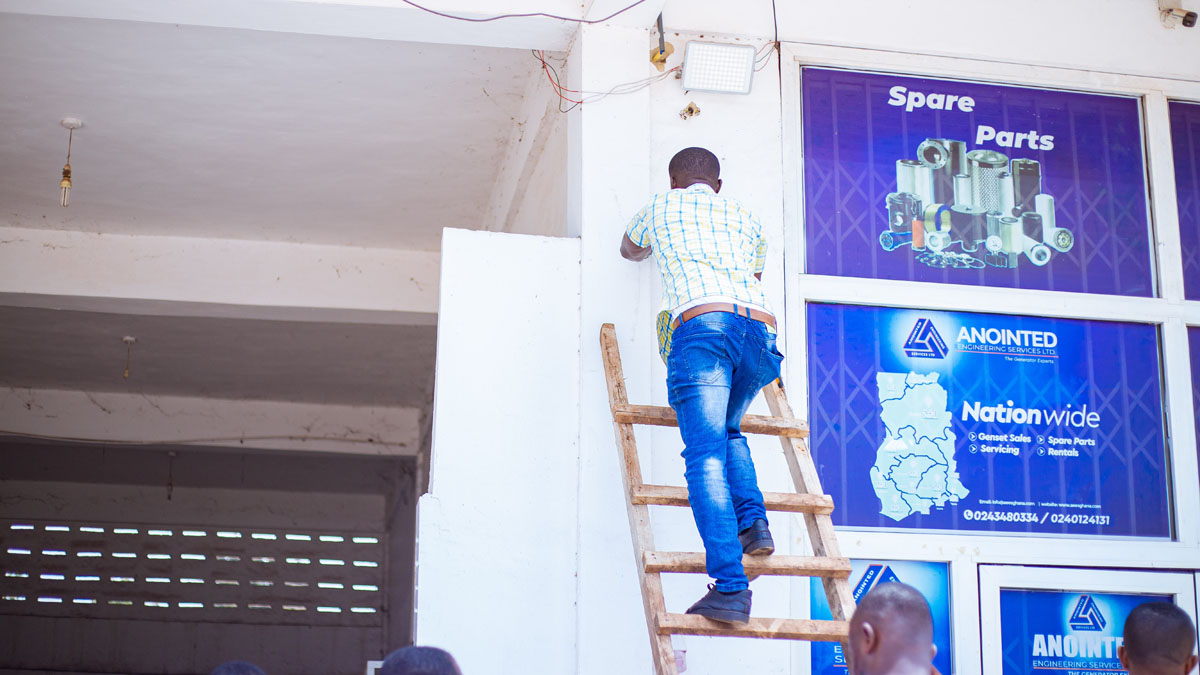
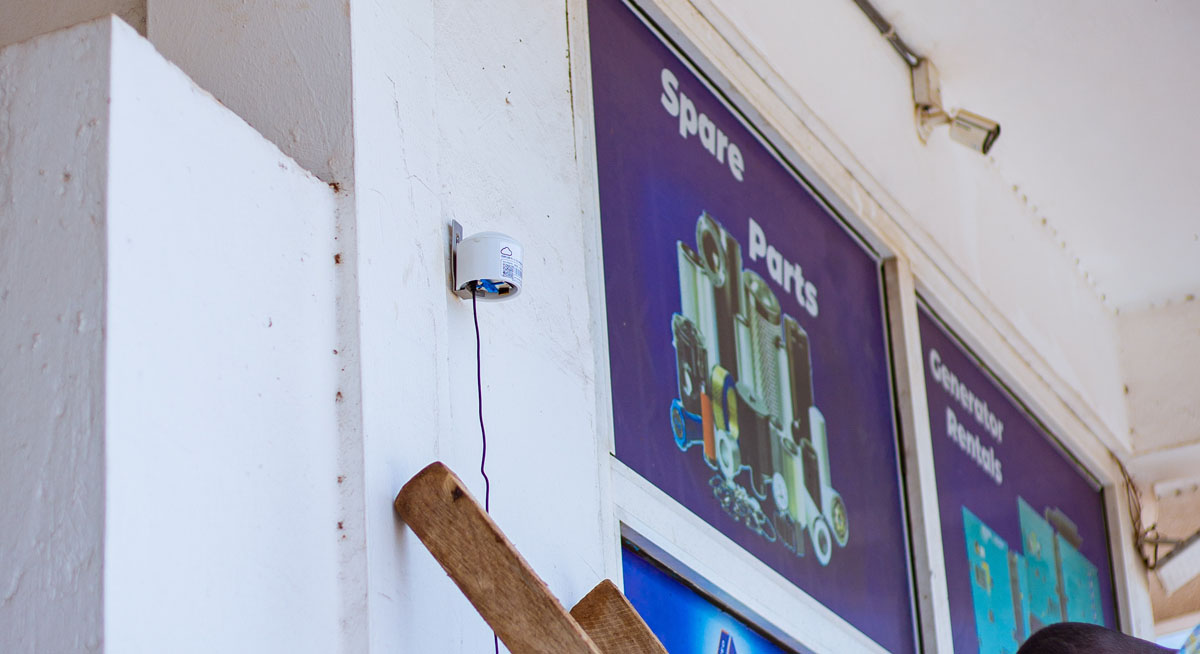
At its core, this project was designed to expand local air-quality monitoring and environmental health capacity in the Bono East region. Over two weeks, myself, my colleague, Madison Fragnito, and two beloved past Mandela Washington summer fellows, Huda Imbrahim and Dr. Joel Dua Afi, installed ten new air-quality sensors that measure particle pollution, seven PurpleAir and three AirNotes. We conducted deployments and mobile monitoring demonstrations across multiple communities. One of the most important outcomes was helping facilitate a first-ever connection between the Ghana EPA Techiman Office and the Kintampo Health Research Center (KHRC). KHRC was already in the process of developing a region-specific correction factor for PM2.5 using the same sensor technology we brought, but they’d been doing this work in isolation. Bringing EPA and KHRC together meant that both institutions could now align their methods, share data, and strengthen the accuracy and long-term sustainability of air-quality monitoring across the region.
But the real impact wasn’t just technical. It was relational.
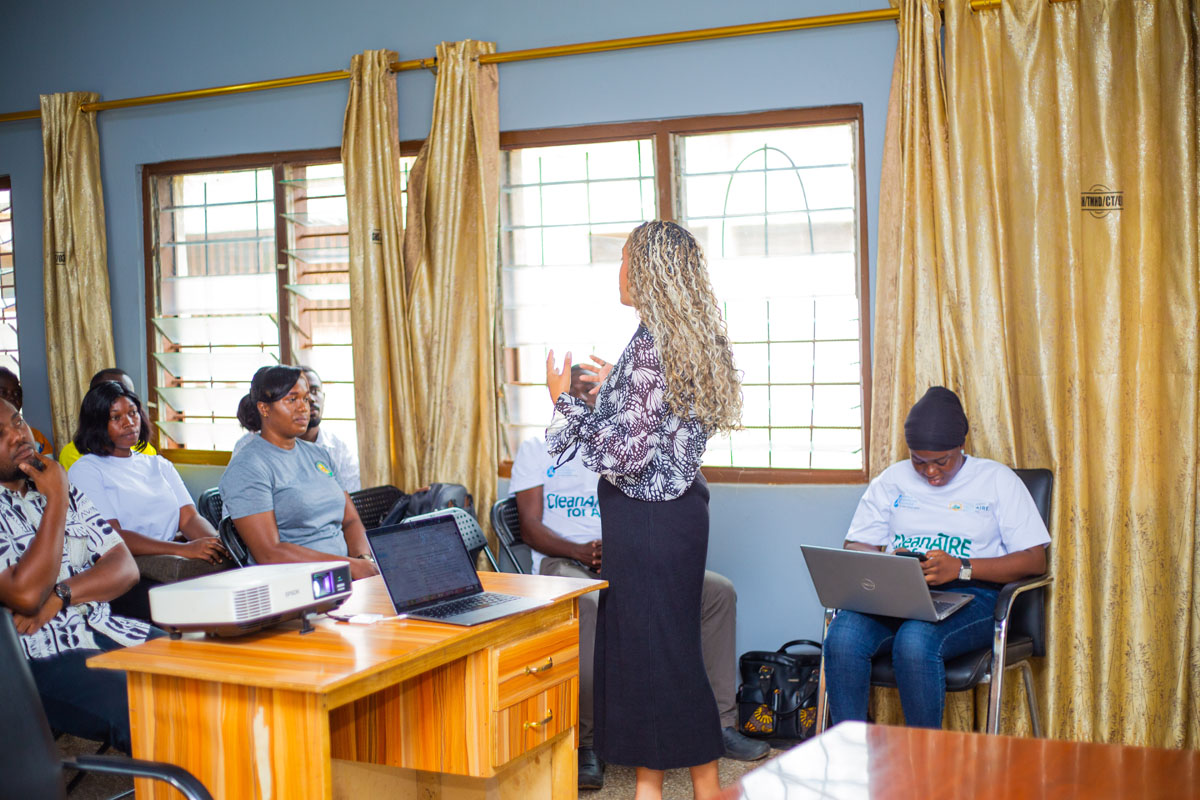
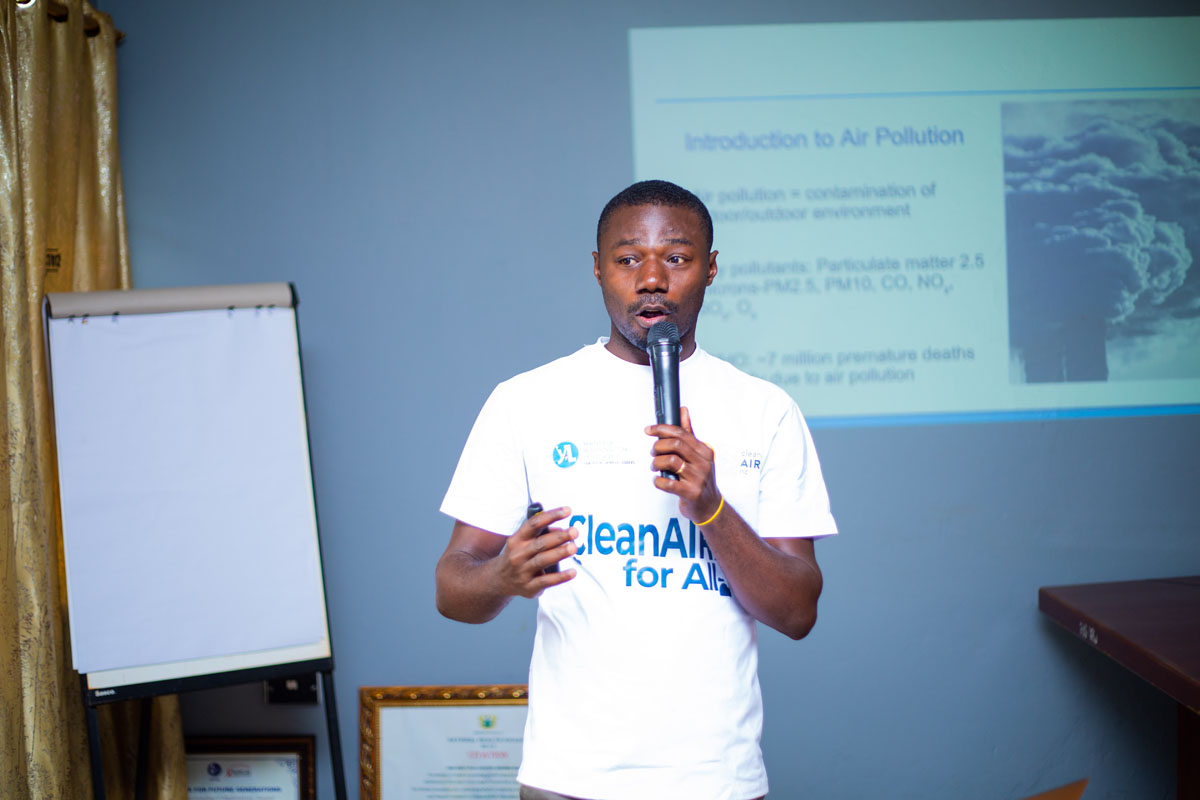
Our technical training with the Ghana EPA staff didn’t feel like a lecture at all. It felt like we were rolling up our sleeves together. Their questions were direct and practical, shaped by what they deal with every day: rural monitoring gaps, heavy dust, illegal mining, open burning, and the challenge of doing a lot with very little. We ended up troubleshooting real scenarios, hiring on the ground local support to realize goals, swapping tips, and comparing experiences. By the end of the session, you could see the shift. Not just to new skills, but a real confidence that they would carry this work forward on their own.
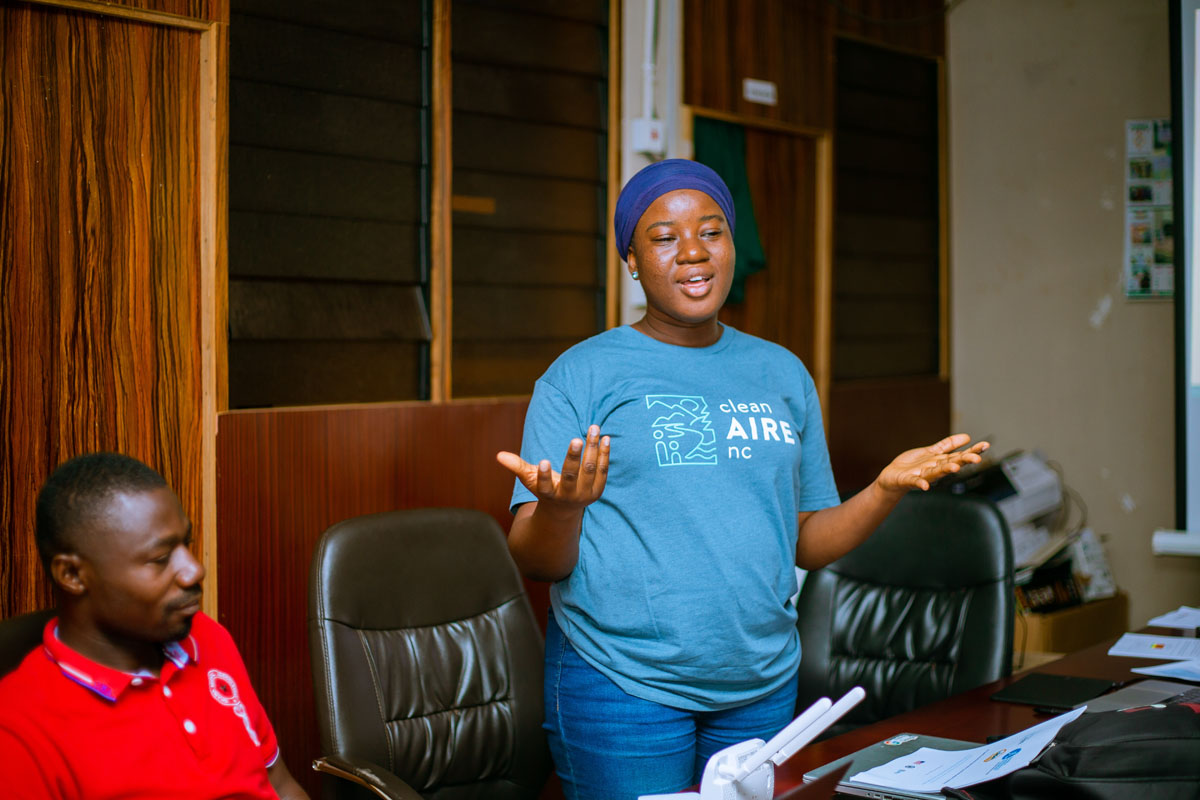
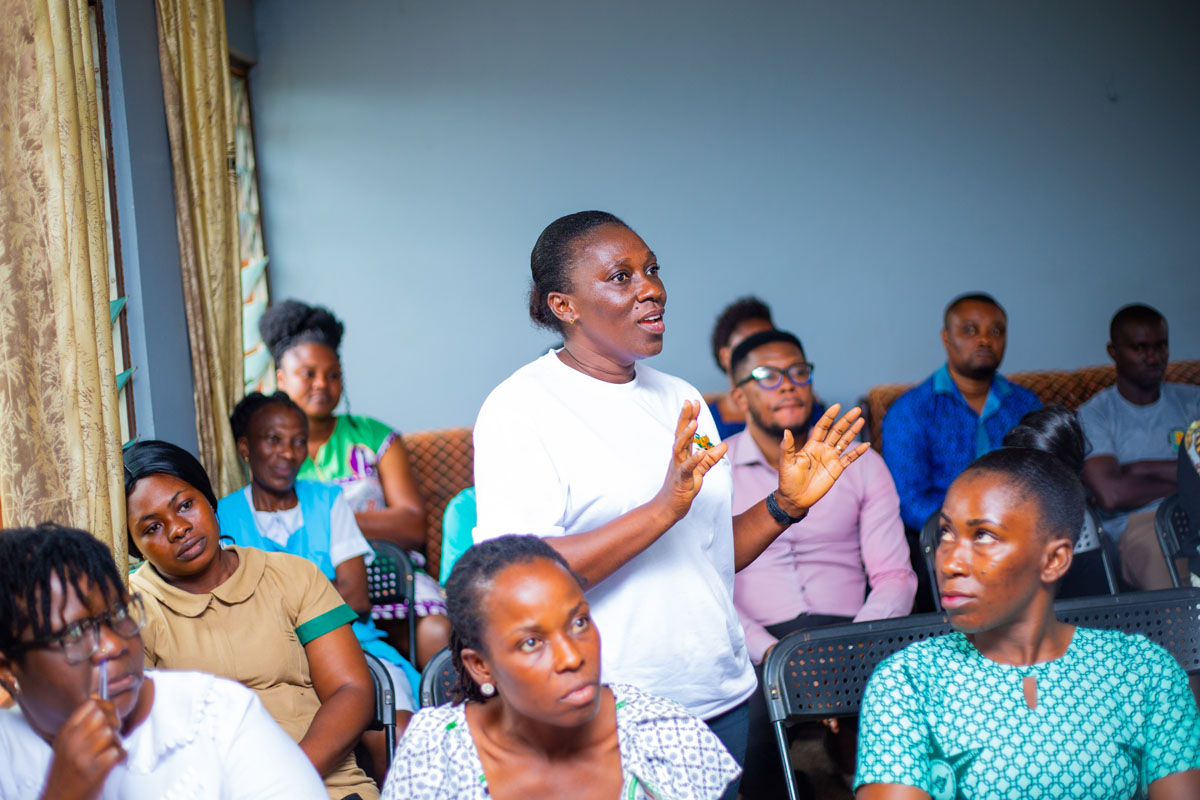
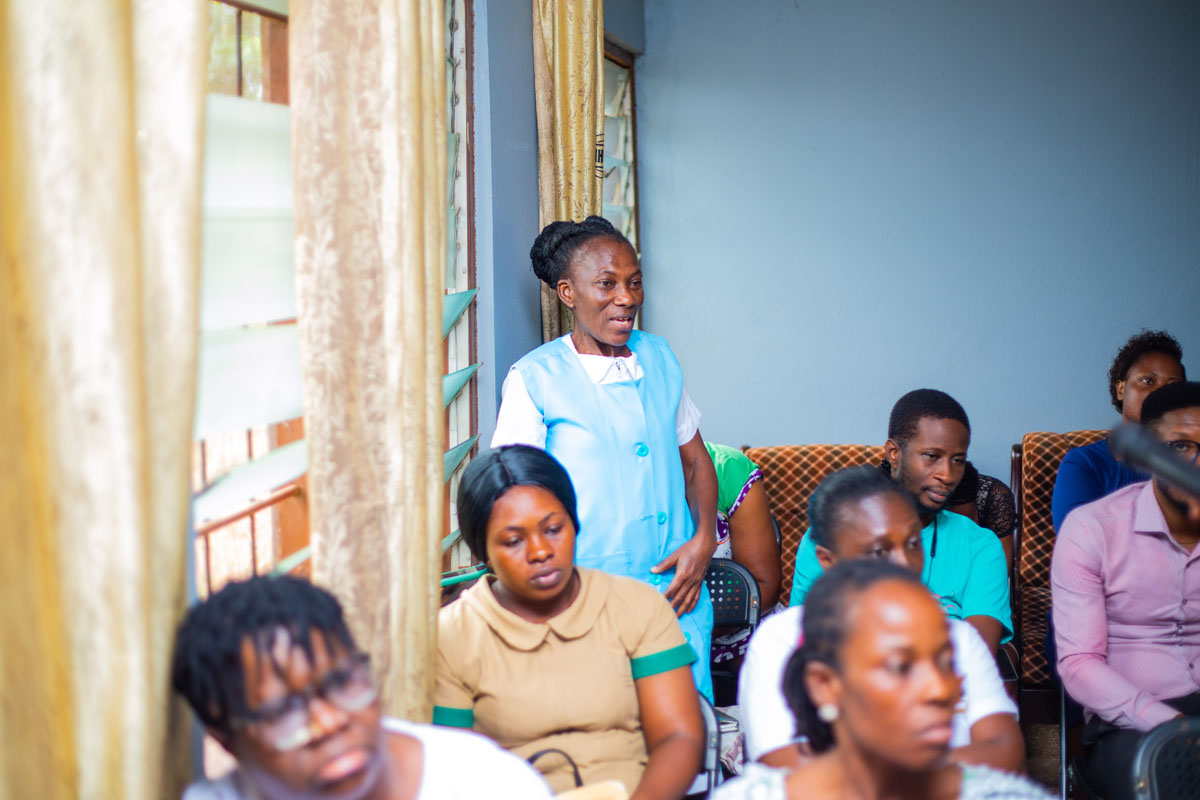
One of the most meaningful days for me was the health training with 34 doctors and nurses. As we talked through the connections between air pollution and respiratory, cardiovascular, and maternal health, I could feel the room shift. Not just learning, but recognition.
Later that afternoon, I ducked into the bathroom for a quick breather. This is my go-to when I just need a moment to myself. I was barely at the sink when one of the nurses, who works at the Nkwaeso Health center, named Genevieve Kpeno, slipped in behind me. She waited a beat (probably sensing my exhaustion), then said,
So there we were, two women in the bathroom, washing our hands and having one of the most heartfelt conversations of the entire trip. We ended up exchanging information right there between the sinks. I joked that all great relationships start in unexpected places, and she laughed and said, “Well, this is where women get things done.” We still talk via email. What started as a training became a real relationship.
This work doesn’t just happen in classrooms or conference rooms. Sometimes it starts in the most ordinary, human moments.
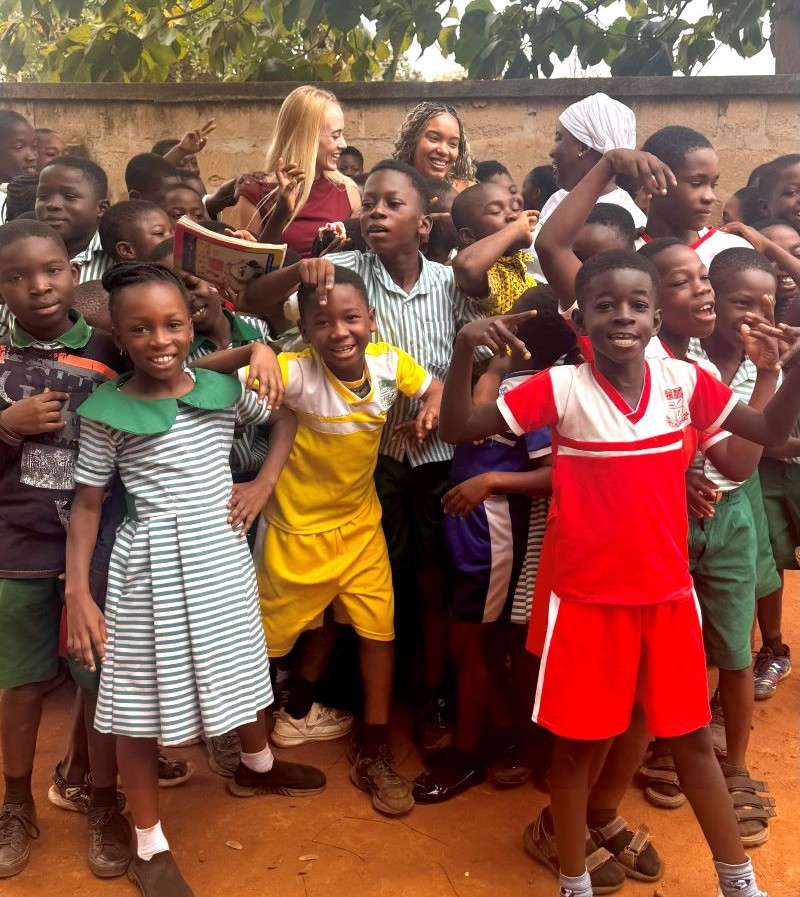
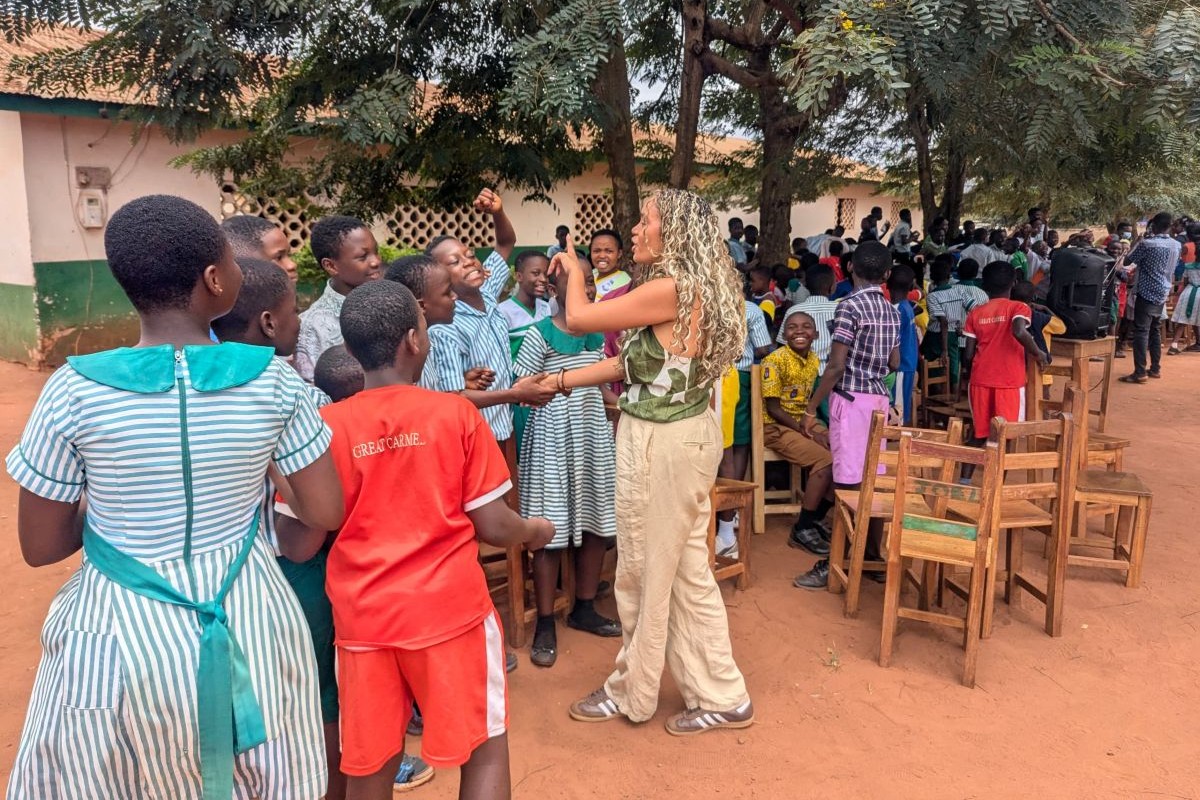
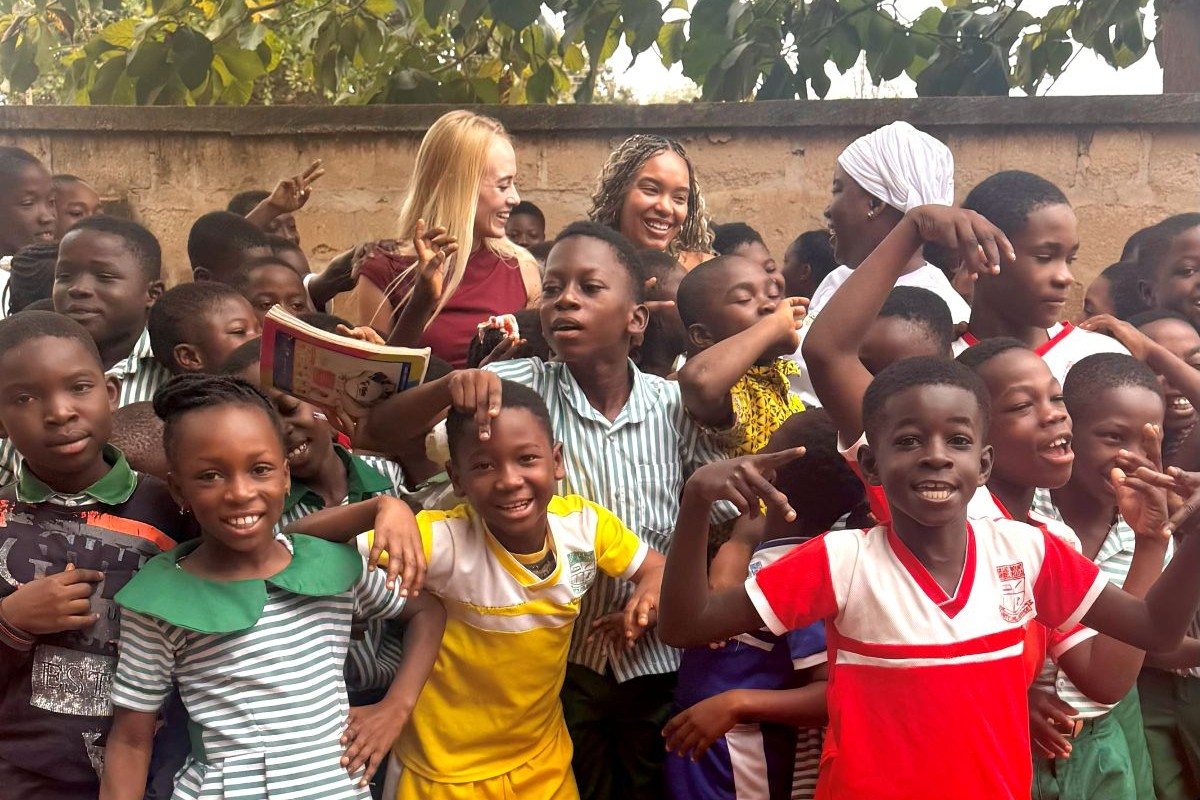
And the 100+ junior high school students we taught? Their enthusiasm was electric. They already understood the environmental issues impacting their region. What they needed was a framework to connect it to science, health, and their own potential as leaders.
There were big milestones on this trip, like our televised interview with the Ghana Broadcasting Corporation at Holy Family Hospital during a deployment. But the moments that really stayed with me were the quieter ones.
Like the long drives between communities and cities across three regions of Ghana. We spent more than 30 hours in the car, and at a certain point, we were all a little delusional from the miles and the heat. Honestly, those rides became some of my favorite memories. Red dust curling behind us and conversations that stretched across everything, including culture, politics, family, hope, duty, the work, and our lives back home. Those in-between moments felt like the heartbeat of the trip.
And then there was the day we watched KHRC and Ghana EPA leadership shake hands for the very first time. It was so simple, so quick, but knowing the context, knowing how much stronger their work could become together, it felt like watching the beginning of something that could reshape monitoring for the entire region.
I also keep thinking about the community conversations we had, especially with children. Hearing people talk about air pollution not as abstract data but as their actual daily life
It just grounded everything. The kids were especially sharp. They already know what’s happening around them and what needs to change. They just need the tools and support to step into that leadership.
This work felt familiar but also entirely new. In a majority-Black country, environmental health isn’t something you have to justify. It’s recognized as both a community and a national issue. Seeing that affirmed something in me. Something I will carry into every room I enter in North Carolina.
We came to Ghana prepared to share our training, our curriculum, our sensors, and our tools. All the things we’d packed, planned, and practiced. But the truth is, Ghana gave just as much back to us, if not more.
We saw a model of collaboration that was rooted in humility. We witnessed people showing up with what they had, doing the best they could, and making space for others to contribute. We were reminded, over and over again, that communities are the experts in their own experience. They know what’s happening around them long before the data ever confirms it. And we were reminded that environmental health may be a global issue, but the fight for it begins at the community level, block by block, household by household, clinic by clinic.
The partners we met didn’t need us to lead, they simply invited us to walk with them. That’s the kind of partnership that lasts well beyond a two-week trip.
This is the first chapter of CleanAIRE NC’s new Unpacking series. This will be an avenue where we reflect on what happens when knowledge crosses borders, when communities teach us as much as we teach them, and when we come home changed by the relationships we build.
The project produced immediate, measurable outcomes. It expanded monitoring infrastructure, new institutional partnerships, strengthened technical capacity, and long-term collaboration between Ghana EPA and KHRC.
But its most meaningful outcome was personal. This trip reconnected me to the heart of why I do this work and reminded me that environmental justice, whether in Charlotte, the foothills of Western NC, or Techiman, begins with listening, learning, and building together.
When knowledge travels, impact multiplies. But so does humility, understanding, and hope.
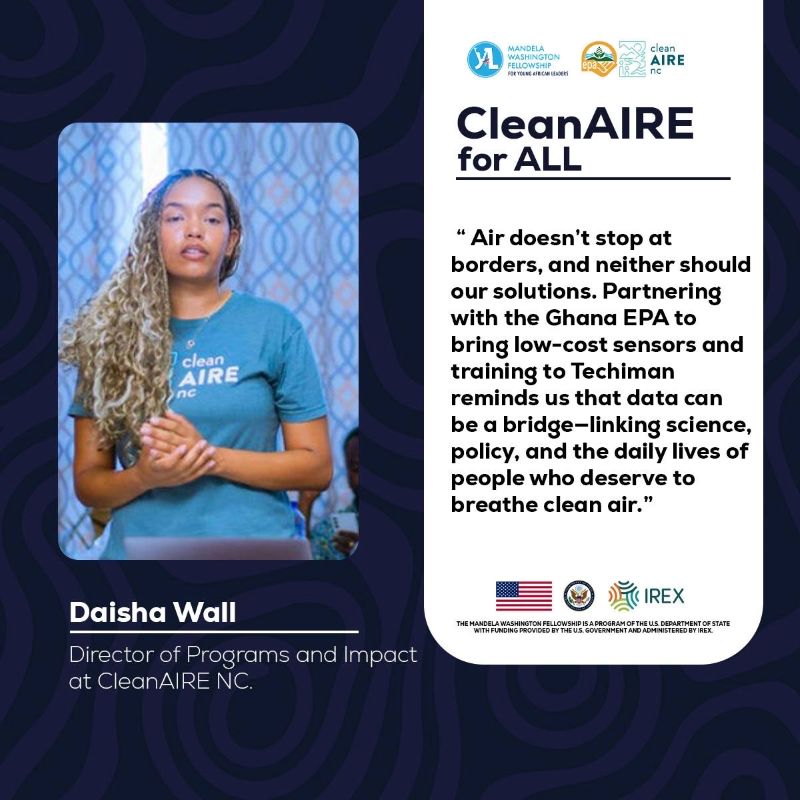







Daisha Wall serves as the Director of Programs & Impact at CleanAIRE NC, overseeing environmental justice, community science, health, advocacy, and education initiatives across the state. With a career rooted in community-centered science and environmental justice, Daisha works to equip communities with tools, knowledge, and partnerships that drive long-term, people-powered change. Her work in Ghana through the Mandela Washington Fellowship Reciprocal Exchange Program reflects her belief that environmental justice is a global movement shaped by shared learning, collaboration, and care.