In many cities, extreme heat is no longer just a summer inconvenience. Heat is an urgent public health crisis demanding a coordinated response. But what does this crisis truly look and feel like on the ground?
CleanAIRE NC, in partnership with SolNation and others, has released a new Heat Mitigation Report, a critical step forward in addressing extreme heat as both a public health and environmental challenge in Charlotte. This report is the culmination of months of dedicated work, capturing the lived realities of impacted community members, first responders, and healthcare workers, and turning those experiences into collaborative action.
Our journey began with a shared recognition of an urgent crisis. Rising temperatures disproportionately affect vulnerable populations, carrying serious health and economic consequences. To develop effective, equitable, and lasting solutions, we knew our strategy had to be grounded in the lived experiences of those most affected.
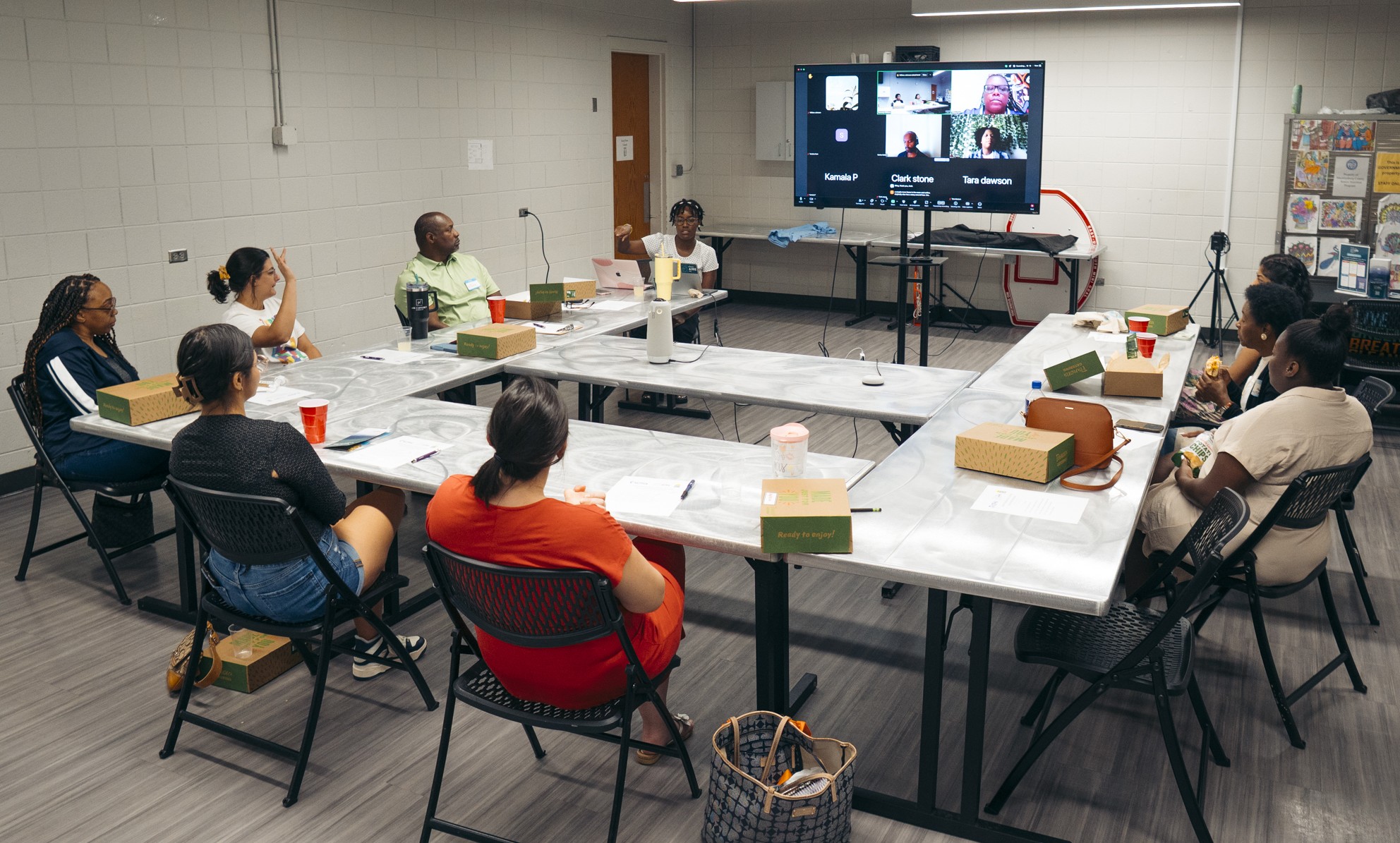
This extreme heat reality spurred our vital partnership with the North Carolina Public Health Association (NCPHA), the City of Charlotte, and Sol Nation. Together, we established a process of community intake and facilitation that CleanAIRE NC will implement as a model for tackling future community issues within our Environmental Justice program.
Over the summer of 2025, our Environmental Justice Program Manager, Kennedy Williams, and our Executive Director, Jeff Robbins, organized and facilitated an intensive community-based research effort. The process flowed through four key phases: participant recruitment, data collection, data preparation, and data analysis. Throughout this process, we conducted five focus groups and three in-depth interviews to capture the authentic, immediate experiences of those on the front lines of the heat crisis.
To conduct these heat mitigation focus groups, we hosted sessions both in person throughout Charlotte and virtually to reach more people. This approach allowed us to hear from community members, faith-based participants, emergency responders, and healthcare providers.
Participants described how excessive heat disrupts daily life, alters work schedules, and limits outdoor activities, but expressed gratitude for having a space to share their experiences with others in the community.
The focus group was a great experience! I appreciated the respectful dialogue, diverse perspectives, and collaborative atmosphere. It was refreshing to share thoughts and learn from others.
The dedication and frankness of our participants were essential. Health concerns, such as heat exhaustion and heat stroke, were prevalent in our discussions, and many participants expressed concerns about higher energy bills due to increased air conditioning use. Healthcare providers highlighted that many patients struggle to recognize early signs of heat-related illness, further increasing risk. Emergency services personnel confirmed a growing number of heat-related calls, particularly involving the elderly, young children, and residents in low-income neighborhoods.
As a first responder, I respond to heat-related emergencies every summer in Charlotte. This focus group gave me a voice to advocate for real solutions that protect residents and prevent future emergencies.
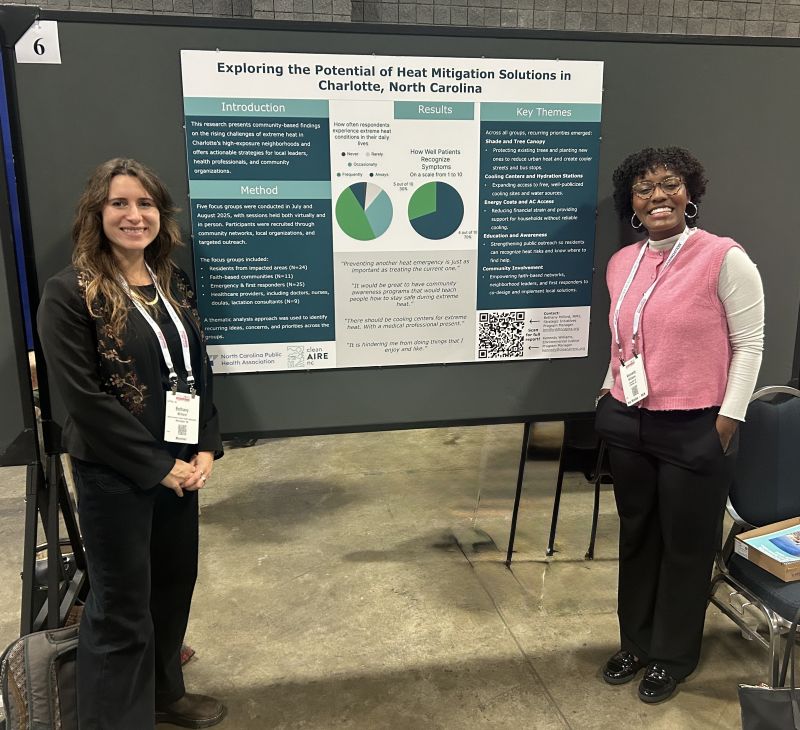
Our Environmental Justice Manager, Kennedy Williams, and Bethany Milford with NCPHA presented the findings of our Heat Mitigation focus groups at the American Public Health Association conference in Washington D.C. in November 2025.
The final report, completed in September 2025, provides a clear blueprint for a coordinated response to the extreme heat crisis, combining immediate and long-term strategies. The research confirms that vulnerable populations face significant health and economic consequences from rising temperatures, emphasizing the need for Charlotte to address extreme heat as a public health and infrastructure priority. The findings also illuminate a path toward the equitable solutions that we can begin building upon now to safeguard health, reduce energy burdens, and build climate resilience.
Explore the full Heat Mitigation Report! You’ll find detailed insights, participant testimonials, and strategies for local leaders, health professionals, and community organizations to take action today. You can partner in making an impact by sharing these findings and encouraging others to get involved in local climate and public health conversations.